Discover how we can help your team select better materials
Material sourcing and treatments often carry hidden social, environmental, and animal welfare risks. We help brands understand what they're using, and what it means.
Please resize your window or rotate your device.

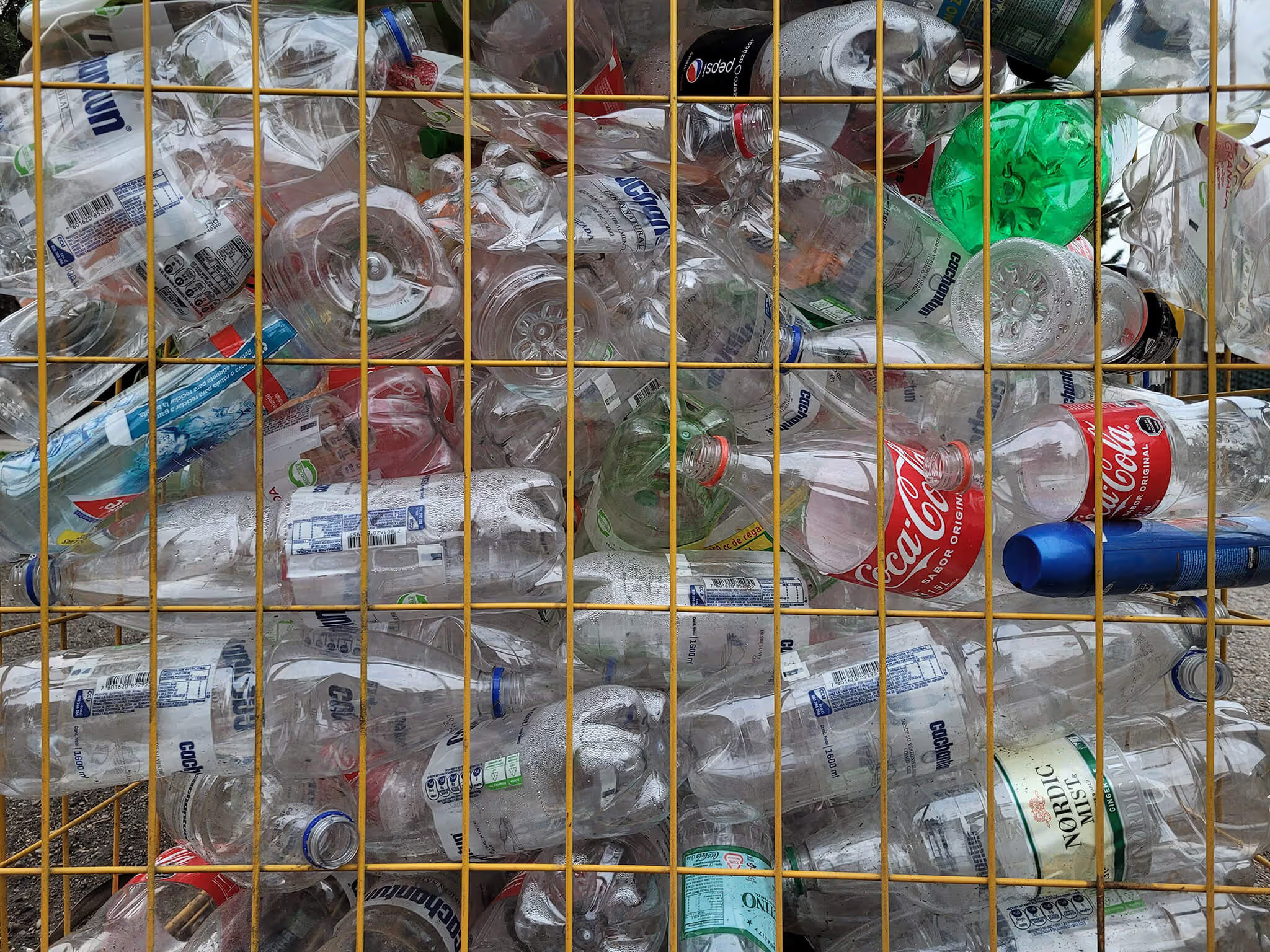
Polyester is a petroleum-based fibre made from plastics such as polyethylene terephthalate (PET), dimethyl terephthalate (DMT), and monoethylene glycol (MEG). It is the most widely used fibre in fashion, valued for its durability and versatility, but its production is energy-intensive, polluting, and reliant on non-renewable resources.
Once produced, polyester does not biodegrade and releases microplastic fibres during wear and washing, which pollute oceans, soils, and enter the food chain. Although recycled polyester (rPET) is available, most is made from recycled plastic bottles rather than textile waste and remains a plastic fibre with environmental limitations.
Where possible, textile-to-textile recycled polyester should be prioritised, as it helps close the loop within the fashion industry by reprocessing discarded garments and production scraps back into new fibres, reducing dependence on virgin inputs and tackling textile waste at its source.
Prioritise alternatives such as organic cotton, linen, hemp, and TENCEL™ Lyocell, which offer lower environmental impact, and better biodegradability. Recycled polyester (rPET) is a better option than virgin polyester but should be chosen carefully due to its continued plastic nature and sourcing primarily from bottles rather than textile waste, which takes a resource from a closed-loop system into a linear system.
If your team needs support sourcing, talk to us to find out how we can help.

Material sourcing and treatments often carry hidden social, environmental, and animal welfare risks. We help brands understand what they're using, and what it means.
Materials and treatments are at the heart of every product. Bergstrand helps brands navigate these choices through clear guidance, structured tools, and practical workshops that embed sustainability into design and development.
Discover more →Our team know that it isn’t just about choosing materials that tick boxes, it’s also selecting materials that feel, behave and look the way they should.
With our core focus on fashion, performance and textiles, we offer advice in a way that doesn’t compromise on your product.
Find out more about what we can do for your brand.
Thank you for your enquiry.
A member of our team will get back to you within 24 hours.
If you’re curious to see how we’ve helped our other clients, feel free to browse our Case Studies.