Discover how we can help your team select better materials
Material sourcing and treatments often carry hidden social, environmental, and animal welfare risks. We help brands understand what they're using, and what it means.
Please resize your window or rotate your device.

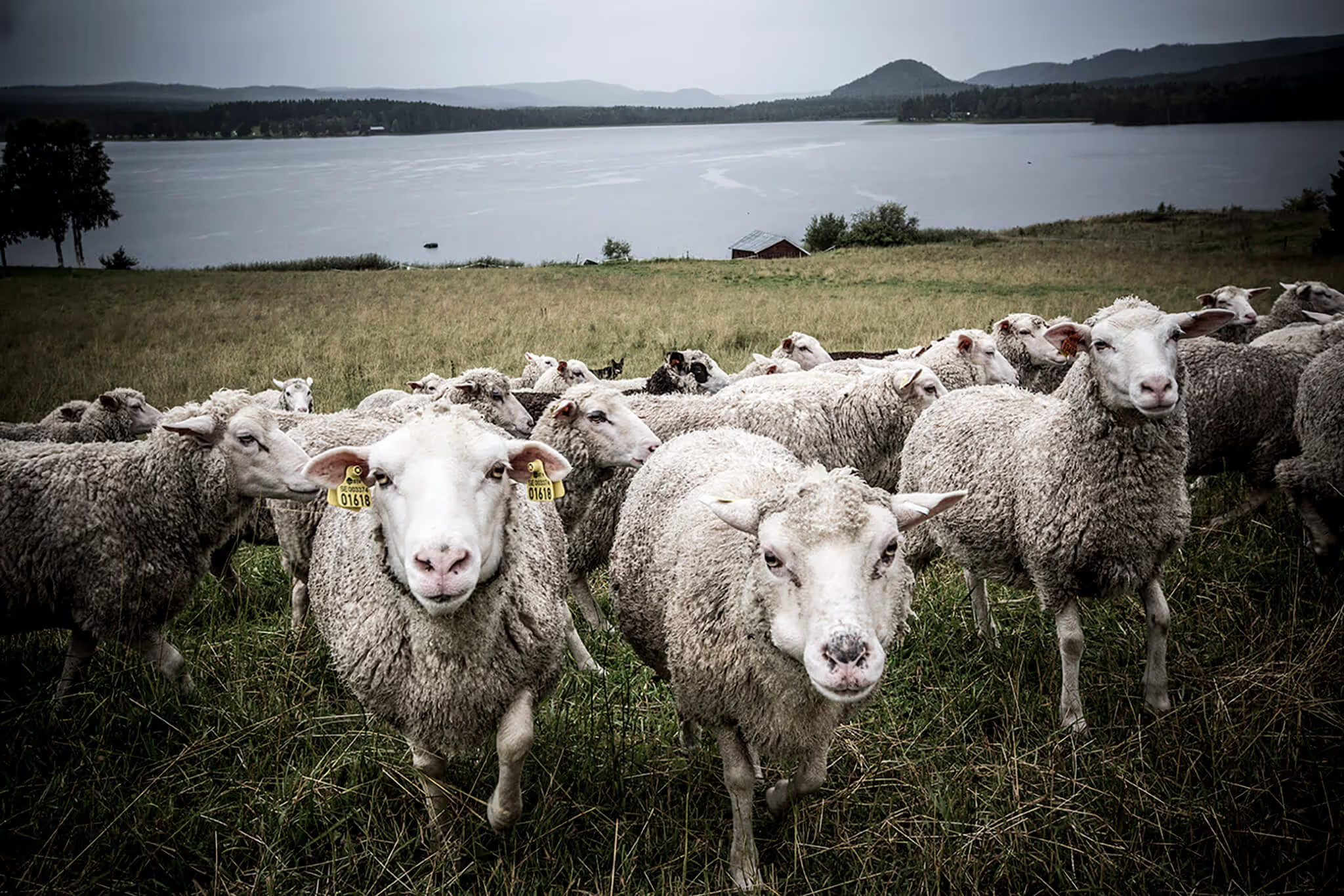
Wool, sourced from sheep, has been used for millennia as a renewable and breathable natural fibre. It is fire-resistant and fully biodegradable when untreated, with its durability supporting longer garment lifespans and circular design principles.
However, the environmental impact of wool depends heavily on farming practices. Poor grazing management can lead to land degradation, and treatments such as superwash processing or heavy chemical dyeing reduce its biodegradability. Animal welfare issues, including mulesing, tail docking, and mistreatment during shearing, persist in some supply chains.
But with responsible sourcing and careful treatment, wool can serve as a cornerstone of responsible fashion.

Choose certified wool from recognised standards such as Land to Market, which ensure farms commit to regenerative soil health and strong animal welfare. Additionally, look for undyed or minimally treated wool and avoid superwash processing unless necessary, to maintain the fibre's natural biodegradability and reduce chemical impact.
If your team needs support sourcing, talk to us to find out how we can help.

Material sourcing and treatments often carry hidden social, environmental, and animal welfare risks. We help brands understand what they're using, and what it means.

Materials and treatments are at the heart of every product. Bergstrand helps brands navigate these choices through clear guidance, structured tools, and practical workshops that embed sustainability into design and development.
Discover more →Our team know that it isn’t just about choosing materials that tick boxes, it’s also selecting materials that feel, behave and look the way they should.
With our core focus on fashion, performance and textiles, we offer advice in a way that doesn’t compromise on your product.
Find out more about what we can do for your brand.
Thank you for your enquiry.
A member of our team will get back to you within 24 hours.
If you’re curious to see how we’ve helped our other clients, feel free to browse our Case Studies.